
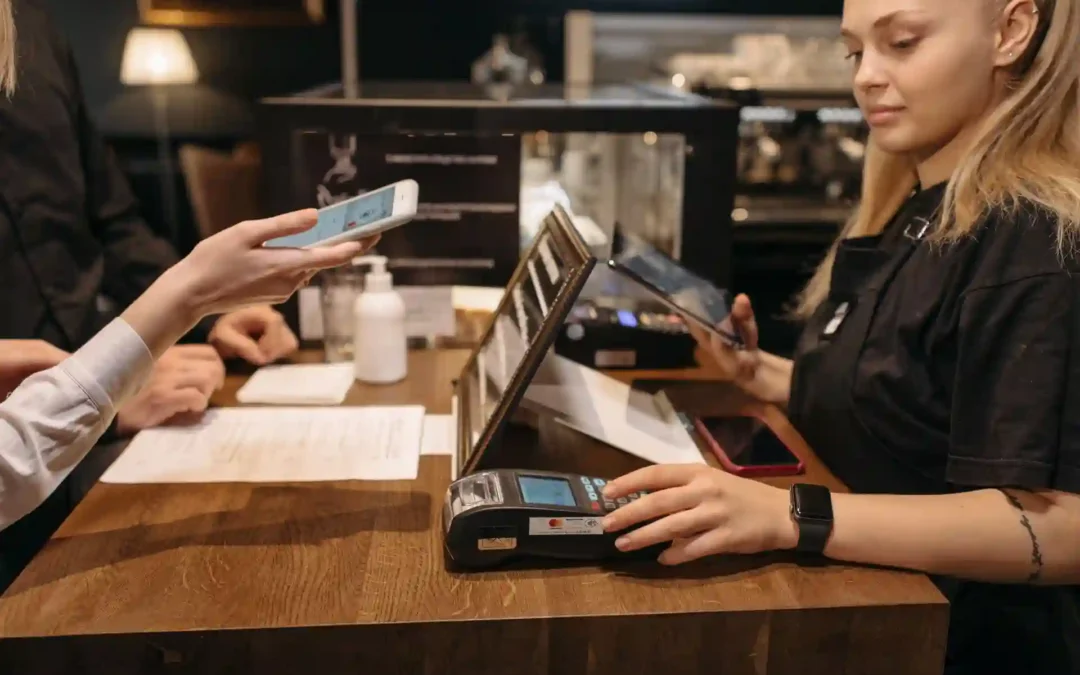
UPI has become one of the easiest ways to pay in India. Whether you are buying fruits or vegetables from a local shop, paying a restaurant bill, ordering food online, shopping online, or sending money to a friend, you probably use UPI several times a week.
So, when news about new UPI transaction charges started appearing, many people naturally became worried. Does this mean we will now have to pay extra every time we make a UPI payment?
Thankfully, no. The new rules do not mean that every UPI payment will become chargeable.
The change is mainly about a new Merchant Discount Rate (MDR) for certain higher-value payments made to merchants. Here is what you need to know.
Table of Contents
When Were the New UPI Transaction Charges Announced?
The government issued the first notification on September 14, 2026. This was followed by a detailed operational circular from the National Payments Corporation of India (NPCI) on September 15, 2026.
The new MDR rules are scheduled to come into effect from October 15, 2026.
The important thing to understand is that these rules are mainly related to merchant payments above Rs 2,000. They do not mean that sending money to another person through UPI will suddenly become a paid service.
What Are the New UPI Transaction Charges?
| UPI Transaction Type | Transaction Amount | Applicable Charge / MDR | Who Is Affected? |
|---|---|---|---|
| Merchant UPI Payment | Up to Rs 2,000 | No new MDR | Customer |
| Eligible Merchant UPI Payment | Above Rs 2,000 | 0.4% MDR | Merchant/payment ecosystem |
| High-Value Eligible Merchant Payment | Rs 75,000 or more | 0.4%, capped at ₹300 | Merchant/payment ecosystem |
| Selected Sectors* | Above Rs 2,000 | Rs 5 MDR | Merchant/payment ecosystem |
| Person-to-Person (P2P) UPI | Any amount | Free | Customer |
Under the new system, an MDR of 0.4% will apply to eligible UPI payments above Rs 2,000 made to merchants.
MDR stands for Merchant Discount Rate. In simple terms, it is a fee connected with processing a merchant payment.
For example, suppose you buy something worth Rs 3,000 from a merchant and make the payment through UPI. At 0.4%, the MDR would work out to Rs 12.
If the eligible payment is Rs 50,000, the MDR would be Rs 200.
However, there is also a cap. For eligible transactions of Rs 75,000 or more, the MDR will be limited to Rs 300.
The important part is that this does not mean the customer will automatically be asked to pay this amount separately.
Will Customers Have to Pay 0.4% for UPI?
This is probably the biggest question in everyone’s mind.
No, customers are not being asked to pay a 0.4% UPI transaction fee.
The 0.4% is an MDR associated with eligible merchant transactions. It is part of the payment-processing arrangement between the different players in the UPI ecosystem.
So, if you pay Rs 10,000 to an eligible merchant, it would be wrong to simply say that you will now have to pay another Rs 40 as a UPI charge.
The new MDR is not the same thing as a customer convenience fee.
What Happens to UPI Payments Below Rs 2,000?
For everyday users, this is good news.
Eligible UPI payments of Rs 2,000 or less remain protected from the new MDR structure.
Think about the payments you make every day. You might pay Rs 200 for lunch, Rs 600 for groceries, Rs 1,200 for a purchase or Rs 2,000 at a local store.
The new 0.4% MDR does not mean that these payments will suddenly have an extra charge.
This is important because small-value transactions make up a large part of everyday UPI usage.
What About Sending Money to Friends and Family?
Nothing changes here.
If you use UPI to send money to your parents, brother, sister, friend or another person, you do not need to worry about the new merchant MDR.
Person-to-person UPI transfers remain free.
For example, if you send Rs 5,000 to a friend or transfer Rs 10,000 to a family member, the new 0.4% merchant MDR does not apply simply because the amount is above Rs 2,000.
The Rs 2,000 threshold is relevant to the specified merchant-payment structure, not ordinary person-to-person transfers.
Are There Different Rules for Some Businesses?
Yes.
The standard 0.4% MDR does not apply in exactly the same way to every type of merchant transaction.
For certain sectors, including railways, telecom, insurance and fuel, a flat Rs 5 MDR will apply to eligible transactions above Rs 2,000.
There are also specific conditions, exemptions and caps under the new framework. So businesses should look at the rules applicable to their particular category rather than assuming that every payment above Rs 2,000 will carry the same charge.
Why Has the New MDR Been Introduced?
UPI has grown incredibly quickly over the last few years.
Millions of people now depend on it every day, and behind every payment there is a huge amount of technology and infrastructure working in the background.
Banks, payment companies and other participants have to maintain servers, security systems, fraud detection tools and payment infrastructure to keep everything running smoothly.
As UPI continues to grow, there is also a question of how the ecosystem can remain financially sustainable in the long run.
The new MDR structure is one way of addressing that issue while still keeping everyday UPI payments affordable for users.
Will Small Shops Be Affected by UPI Transaction Charges?
It depends on the business.
The new framework includes provisions intended to protect smaller merchants. Certain QR-based UPI merchants earning less than Rs 1 lakh per month through such payments are exempt from the MDR.
That could be helpful for small shops and local businesses that mainly receive smaller payments.
Larger businesses that receive a significant number of high-value UPI payments may feel the impact more because MDR could become an additional payment-processing cost for them.
Does This Mean UPI Is No Longer Free?
Not really.
Saying “UPI is no longer free” would give the wrong impression.
Person-to-person payments remain free, and eligible merchant payments up to Rs 2,000 remain protected from the new MDR. The 0.4% MDR is applicable only to specified merchant transactions above the threshold.
For most people using UPI for normal everyday payments, there may be little noticeable difference.
What Should You Do as a UPI User?
Honestly, there is not much you need to change.
You can continue using UPI for shopping, paying bills, ordering food and sending money to people you know.
However, it is always a good idea to look at the final amount before confirming a payment. If a merchant asks you to pay an additional amount because you are using UPI, ask them what the charge is for.
Do not automatically assume that the government has introduced a mandatory UPI fee for customers.
Frequently Asked Questions
Will I have to pay a UPI transaction fee from October 15, 2026?
No. The new MDR is not a general fee that will be charged to every UPI user.
What is the new UPI MDR rate?
The standard MDR for eligible merchant UPI transactions above Rs 2,000 is 0.4%, subject to the applicable rules and maximum cap.
What is the maximum MDR for a high-value transaction?
For eligible transactions of Rs 75,000 or more, the MDR is capped at Rs 300.
Will I be charged when sending money to a friend through UPI?
No. Person-to-person UPI transfers remain free.
Are UPI payments of Rs 2,000 or less still free?
Yes. Eligible transactions up to Rs 2,000 remain protected from the new MDR structure.
Who is affected by the new UPI MDR?
The change mainly affects merchants receiving eligible UPI payments above Rs 2,000.
Will the merchant charge me the 0.4% MDR?
The MDR is a merchant-side payment-processing charge. It is not intended to be a separate 0.4% fee imposed directly on the customer.
When will the new UPI MDR rules start?
The new framework is scheduled to take effect from October 15, 2026.
Final Thoughts
The phrase “UPI transaction charges” may sound worrying, especially when UPI has been one of the most convenient ways to make payments without worrying about additional fees.
But the actual change is more limited than it may seem.
The new rules introduce a 0.4% MDR for eligible merchant UPI transactions above Rs 2,000, with the MDR capped at Rs 300 for transactions of Rs 75,000 or more. Some sectors will follow a separate Rs 5 fee structure.
For ordinary users, the important thing to remember is that person-to-person UPI transfers remain free, and eligible payments of up to Rs 2,000 remain protected.
So, there is no reason to stop using UPI. For most everyday payments, your experience should remain much the same.
The people who need to pay closer attention are merchants, particularly businesses that regularly receive larger UPI payments. They will need to understand how the new MDR rules apply to their transactions and what they mean for their payment costs.
Read Also :https://justtechinfo.com/top-10-tech-innovations-and-trends-in-2026/Top 10 Tech Innovations and Trends in 2026 with Examples